
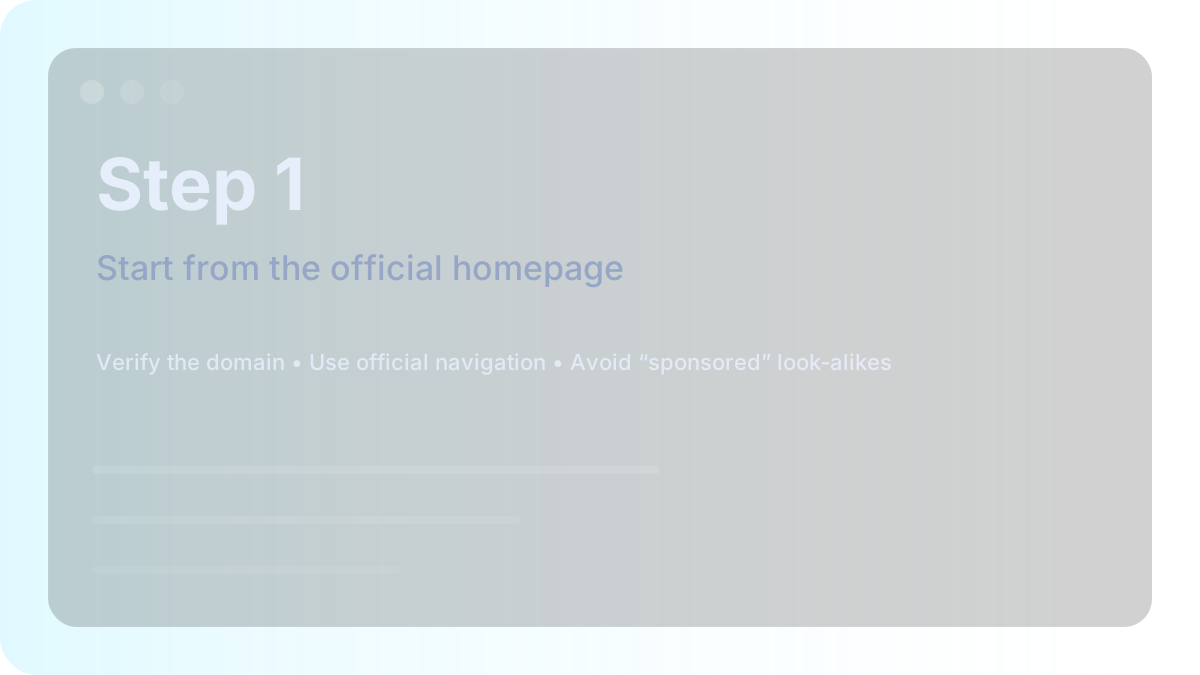

If you’re trying to reach thinkorswim® login, the safest habit is to begin at the official Schwab homepage and navigate from there. This page explains secure entry points, common errors, and what to do if you suspect a fake login page.
Two safe routes to thinkorswim
| Route | What you do | Why it’s safe |
|---|---|---|
| Route A (recommended) | Start at Schwab.com → Trading → thinkorswim | Lowest risk of look‑alike domains; works for most users |
| Route B (direct) | Use the official thinkorswim Web domain | Faster, but you must carefully verify the domain spelling |
Recommended safe route (step‑by‑step)
- Open the official Schwab homepage (type the domain manually).
- Navigate to thinkorswim from Schwab’s trading/platform menu.
- When prompted, sign in on the official Schwab login page only.
- Open thinkorswim Web in your browser or follow official download steps for desktop.
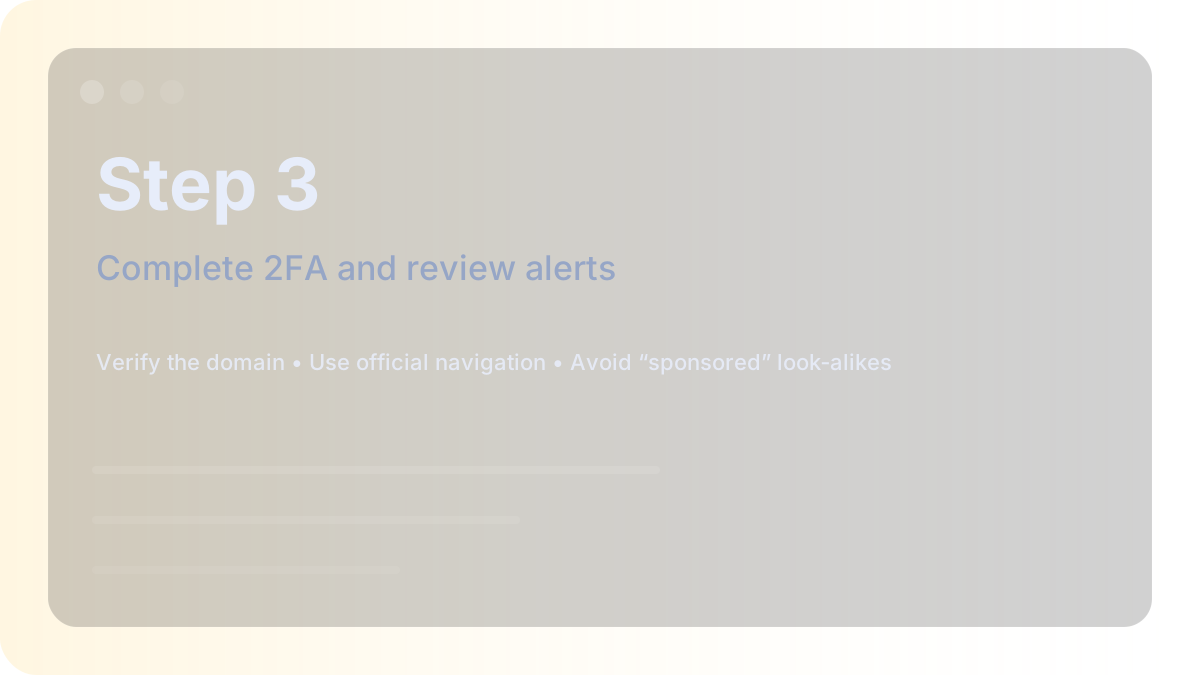
- Complete 2FA if enabled, then confirm you’re in the expected account.
Direct official pages
These links are official, but many users still prefer starting from Schwab.com to reduce mistakes:
Direct official pages
Login troubleshooting (no risky shortcuts)
If you can’t sign in, try these safe checks before contacting support:
- URL verification: close any tabs with suspicious domains and start again from Schwab.com.
- Cookies/session: try a private window; then clear cookies for Schwab domains if needed.
- Extensions: temporarily disable extensions that inject scripts (some privacy tools can block authentication).
- Network: switch networks if your office firewall blocks certain services.
- Recovery: use “Forgot password” only on the official Schwab login page.
Desktop vs Web: what to try first
If login works on Web but not in Desktop, the desktop install may need an update or reinstall. If desktop works but web doesn’t, the issue is often browser cookies or extensions.
- Web issues: try another browser, disable extensions, update browser.
- Desktop issues: restart, update, reinstall from official source.
- 2FA prompts: confirm your preferred method is current on the official site.
Red flags that indicate a fake login page
- Spelling errors in the domain or page text.
- Requests for your full SSN or unusually detailed personal info.
- Pressure/urgency messages (“verify now or lose access”).
- Prompts to install unknown software or call a phone number shown on the page.
Video walkthrough
This is an optional tutorial video hosted on YouTube. Always verify you’re on an official Schwab page before entering credentials.
Start from Schwab.com (official)
Common error messages and what they usually mean
Different login screens can show different wording, but the underlying causes are often the same: session/cookie problems, network restrictions, or security verification requirements.
If you see repeated prompts to re-authenticate, focus on cookies and extensions first. If you see blocked access messages, try another network and ensure your browser is updated.
- “We can’t sign you in right now”: try again from Schwab.com, then switch browsers or use private mode.
- “Too many attempts”: stop and wait; repeated tries can trigger security locks.
- Blank page after login: disable extensions and allow third‑party cookies only if the official page requires it.
- 2FA keeps prompting: check that your device clock is correct and that your preferred method is current on the official site.
What to prepare before contacting support
If you need official support, having a few details ready can speed up resolution without sharing sensitive data publicly.
Do not post your account number or full personal information on forums. Use official support channels listed on Schwab.com.
- Approximate time you attempted to log in
- The device and browser/app you used (e.g., Windows + Chrome)
- Whether the issue happens on multiple networks
- The exact official URL you started from (without sharing credentials)